Pujada al Pi | Pine Tree Climb, Pollensa
Experience the Pujada al Pi 2026 in Mallorca, one of the island’s most thrilling winter traditions. Discover the Pujada al Pi in Pollença 2026, where locals haul and climb a towering pine tree. This iconic celebration is among the top events in January in Mallorca, blending fire, folklore, and community spirit. Explore January festivals in Mallorca and find unforgettable things to do in Mallorca in January.
17 January 2026
Every January 17, deep in the chill of winter, the town of Pollença in northern Mallorca lights up with smoke, music, anticipatory crowds, and one of the island’s most captivating folk spectacles: the Pujada al Pi (the Climb of the Pine). Part religious festival, part wild local challenge, the event is a vivid expression of community, tradition, daring — and just a touch of madness.
Origins & Symbolism
The Pujada al Pi is part of the larger Sant Antoni festival in Pollença, honouring Saint Anthony (Sant Antoni), the patron saint of animals. Across Mallorca, January 17 is marked with bonfires, animal blessings, and local revelry, but in Pollença, the Pine Climb is the defining event.
Its roots are a bit mysterious — while references to “El Pi de Sant Antoni” appear from the late 19th century, local lore and ritual practices suggest the tradition is much older. The activity combines processional, competitive, and symbolic elements: bringing a massive pine from the forest into town, erecting it, greasing its trunk, and seeing who can conquer its slippery height.
Because the pine is greased (traditionally with soap), the attempt to climb it becomes a test of strength, agility, daring — and perhaps a bit of folly.
The Stages of the Festival
Over several days the town pulses with activity, but everything builds toward January 17.
Bonfires & Correfocs (Night of January 16)
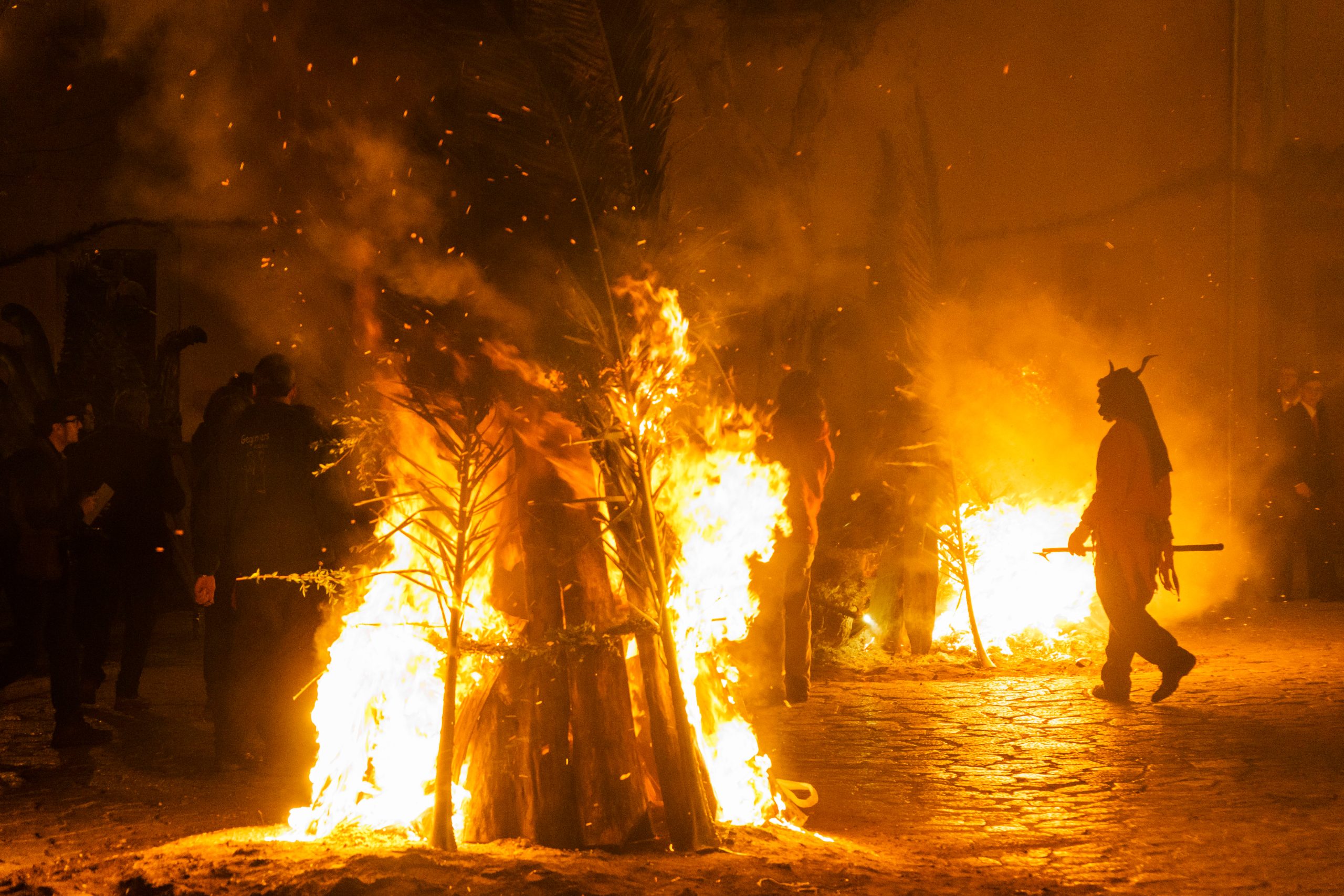
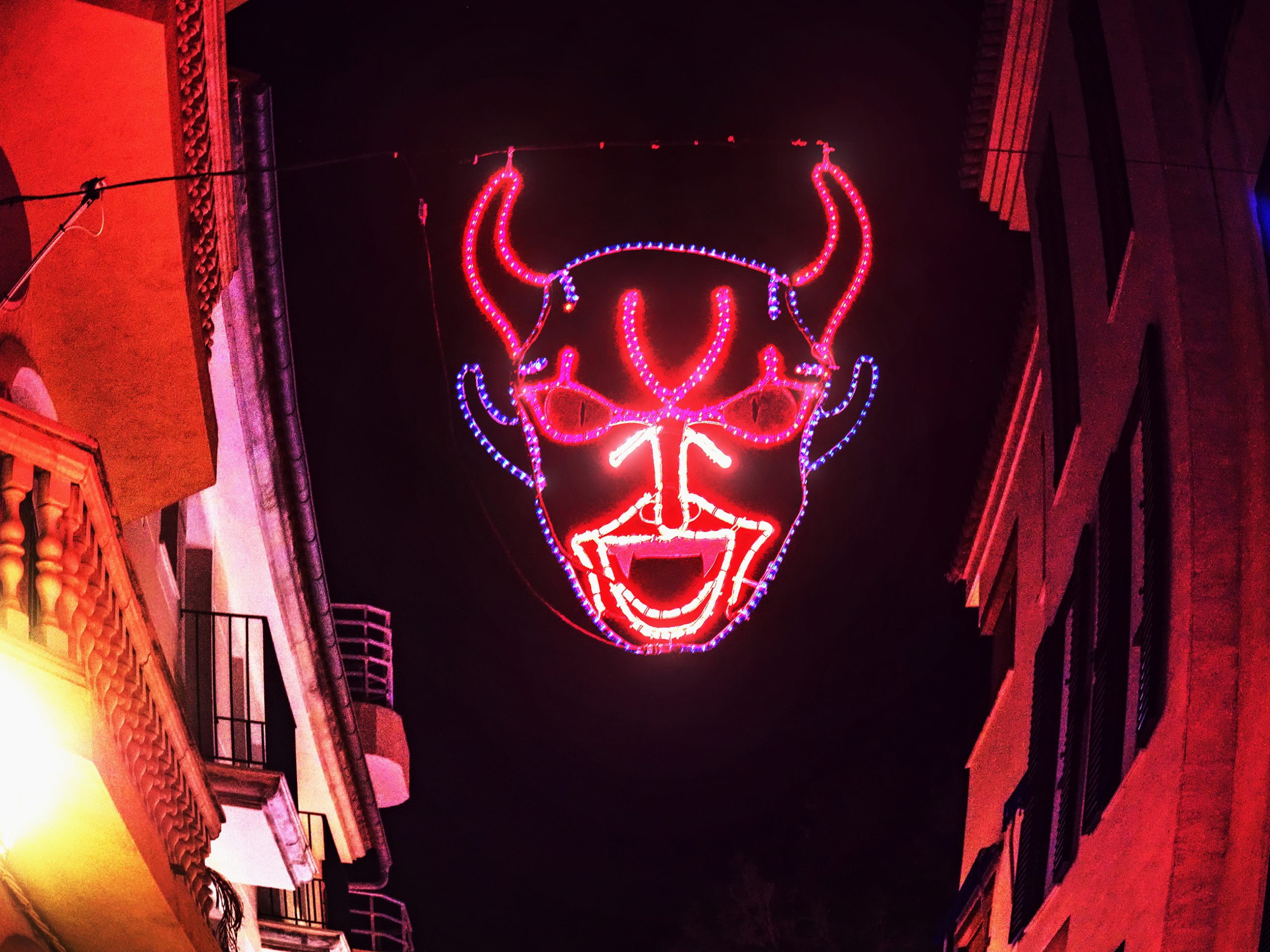
The evening before the climb, Pollença lights up with foguerons (bonfires) and correfocs (fire runs with “dimonis,” or demons) weaving between crowds throwing sparks and drumming rhythms. Bonfires made of themed wood stacks — often decorated with allegorical figures — blaze in squares across town and nearby villages. These acts evoke the purifying power of fire, warding off evil and symbolically heralding renewal.
Animal Blessing & Gathering the Pine
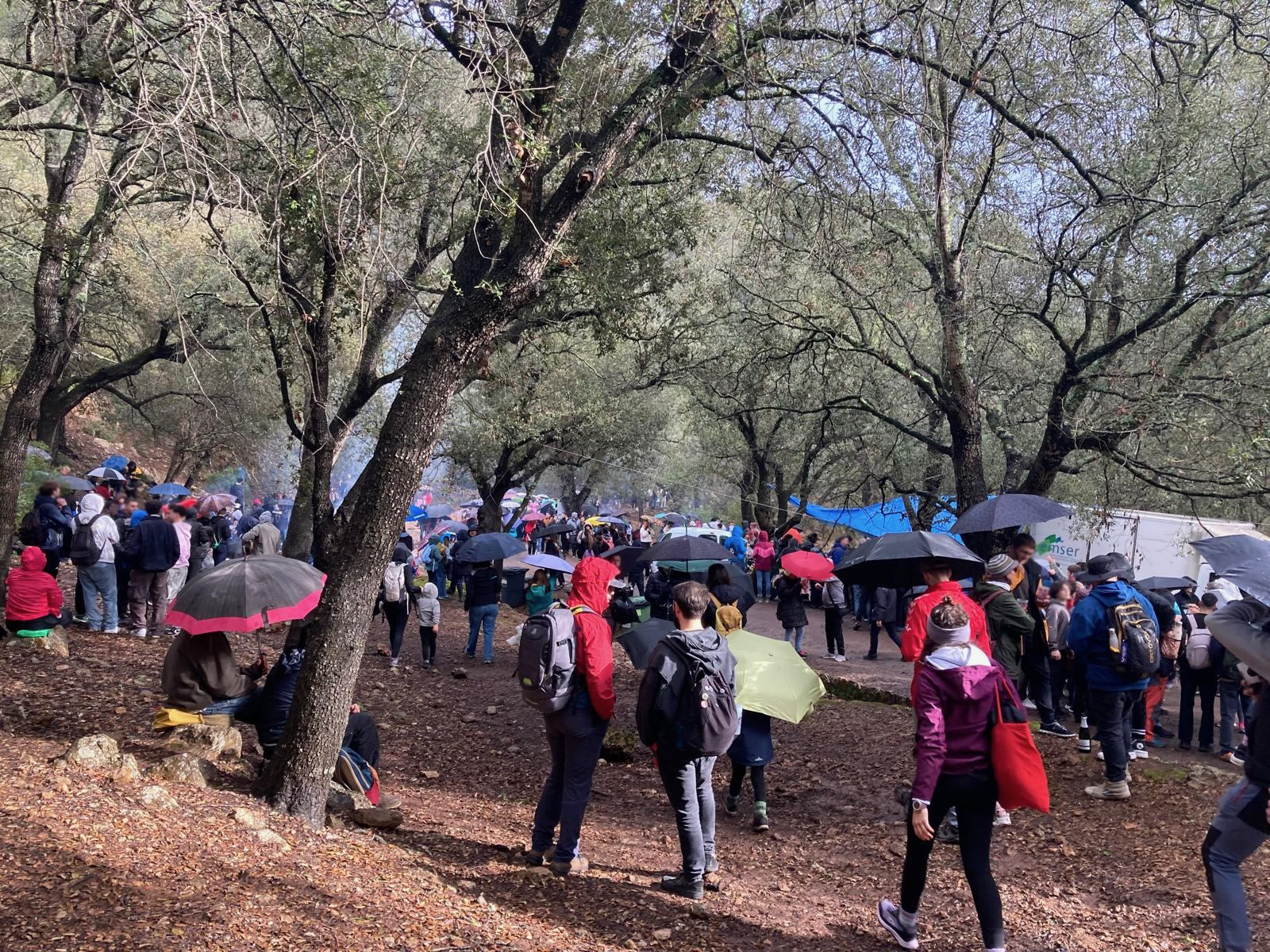
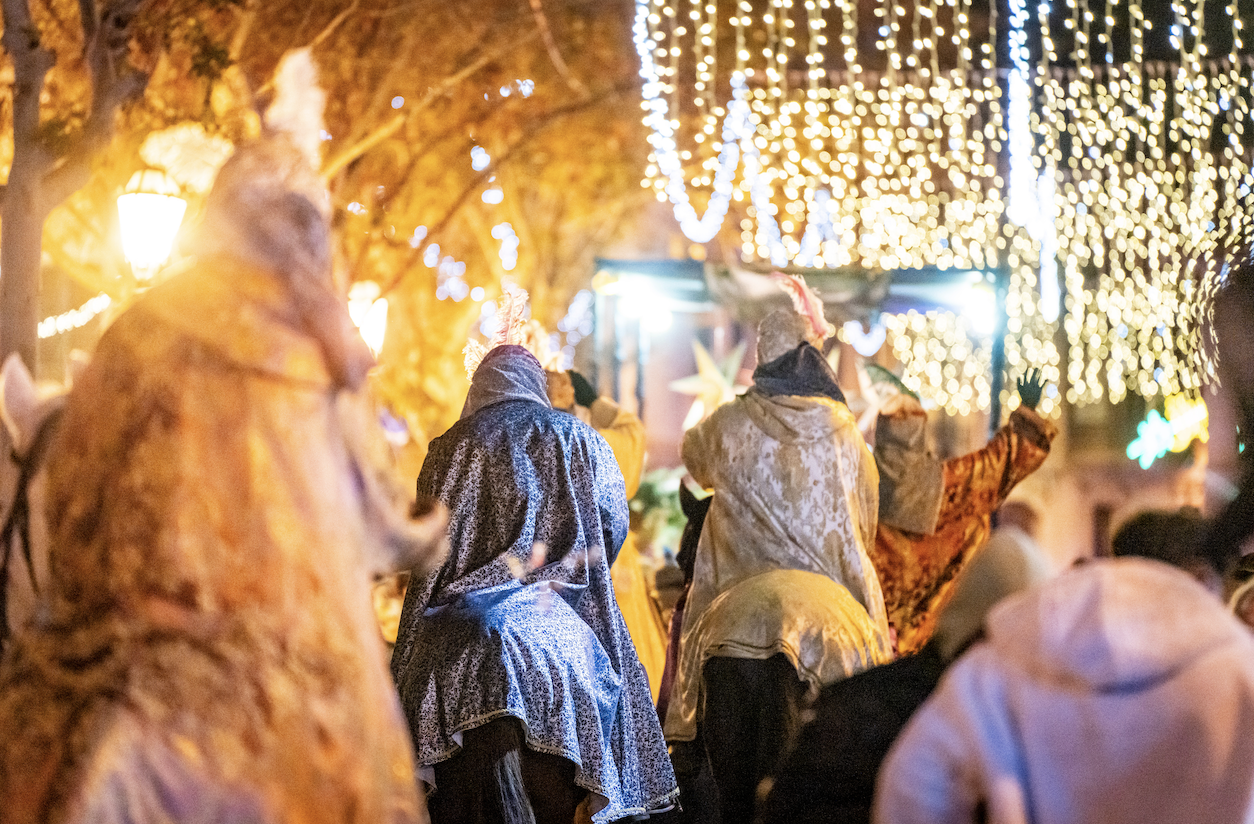
On January 17 at midday, locals bring their animals to be blessed in a ceremonial ritual led by the church, honouring Sant Antoni’s role as protector of animals. After this, participants — often a long procession — head to the Ternelles estate, a rural area just outside Pollença, where a tall pine (around 20-24 meters) has been felled, stripped of its branches and bark, and prepared for transport.
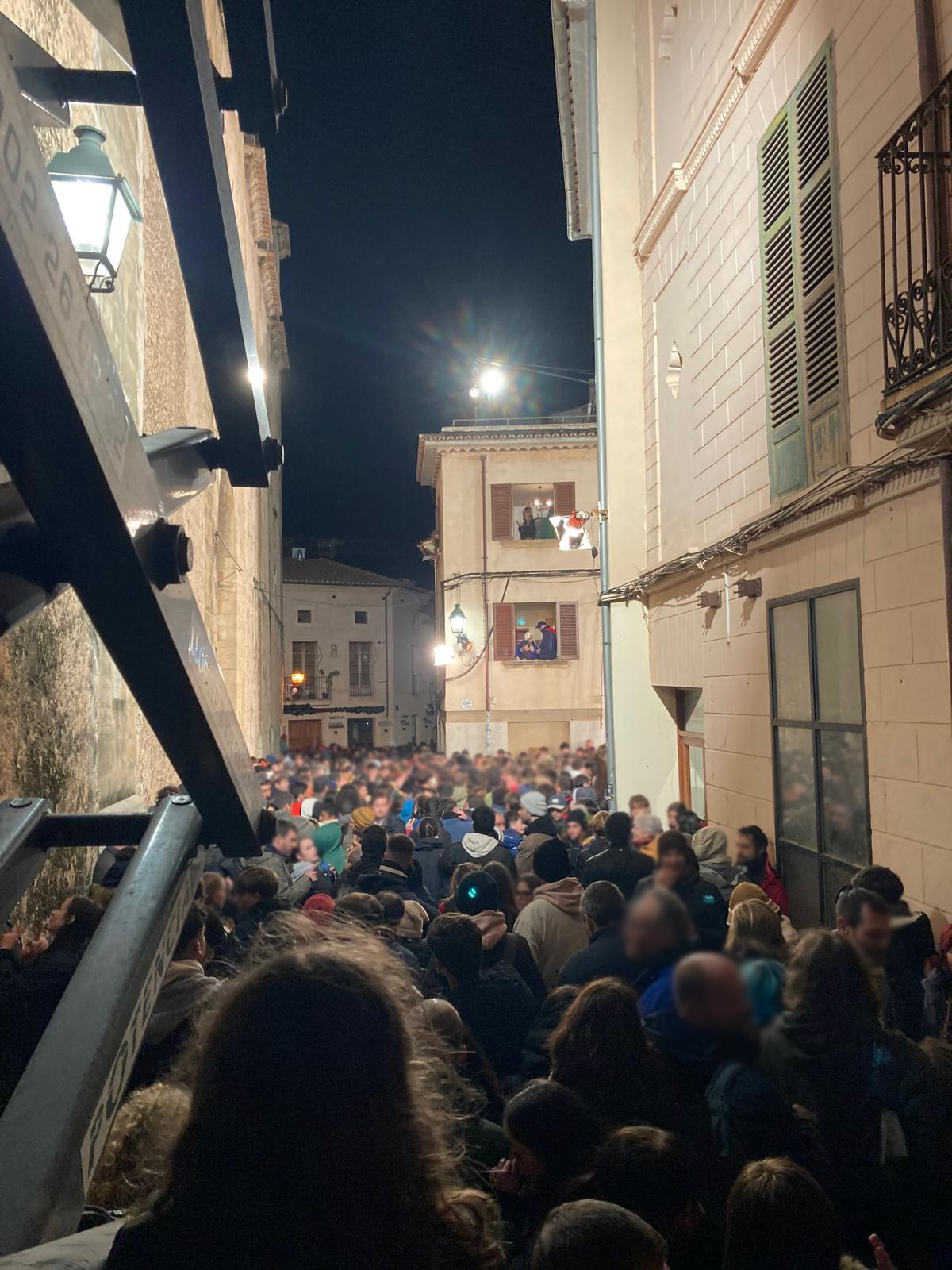
Once ready, volunteers haul it — by ropes, manpower, or tractors — along forest tracks and through the narrow town streets to the Plaça Vella (Old Town Square). This journey is slow and festive: people stop along the way for food, music, and laughter as the pine inches closer to town.
Erecting and Soaping the Pine
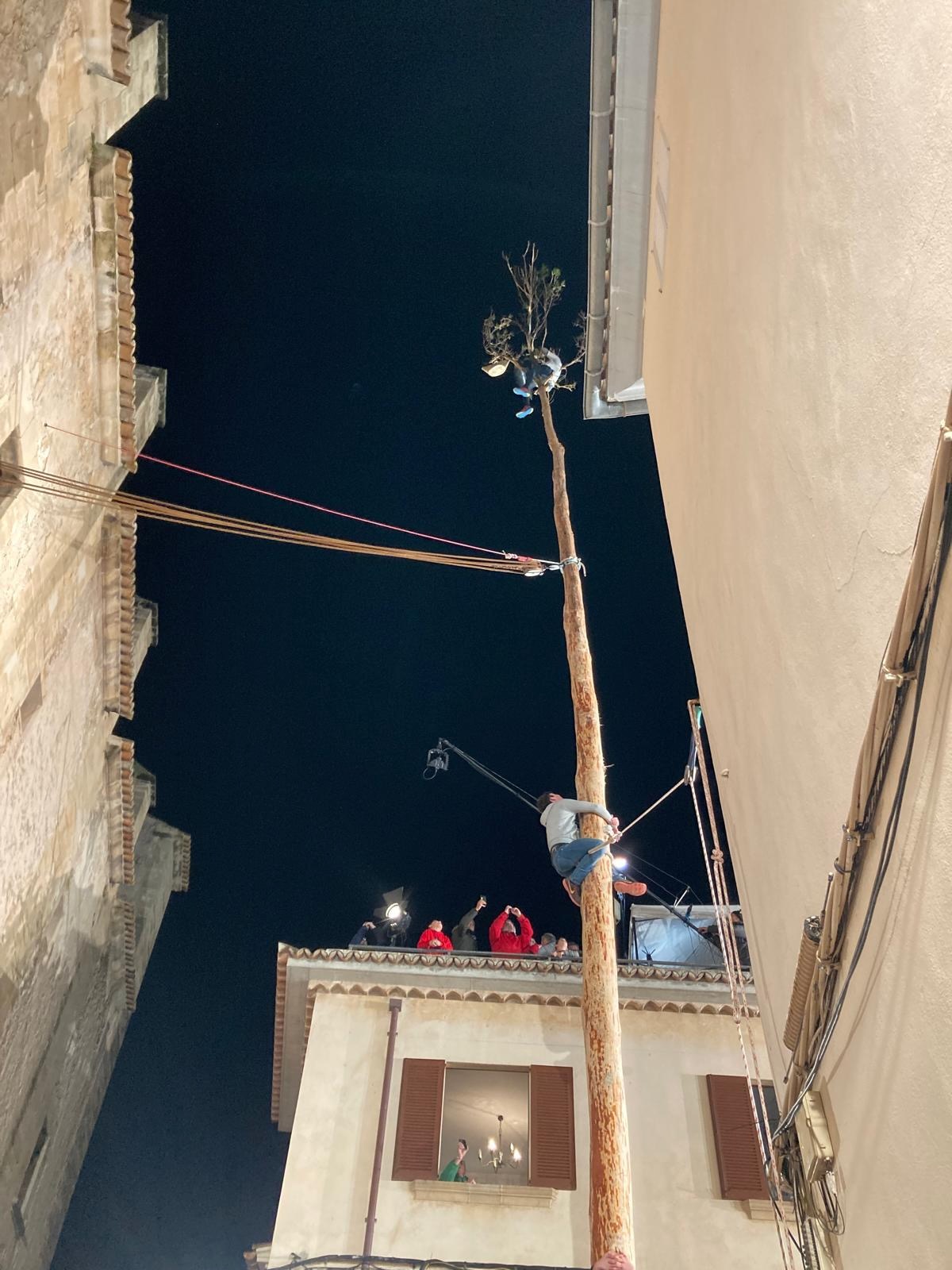
When the pine finally reaches the square, the trickiest part begins: lifting it upright using ropes, human strength, and careful coordination. Before anyone can climb, the trunk is coated thickly in soap or another slippery substance — intentionally making the ascent far more difficult.
The Climb & the Victory
This is the moment everyone’s been waiting for. Competitors — usually young men, though others sometimes join — scramble up, often forming human pyramids or boosting one another as they attempt to reach the upper branches. With no harnesses, no safety nets, and a slick surface, the climb is equal parts suspense and spectacle.
After a dramatic struggle, one climber manages to reach the top, where a wicker basket or prize awaits — traditionally a rooster, though now often a symbolic gift from a local butcher. As confetti flutters down over the crowd, cheers erupt from the packed square. The descent is just as precarious, and every successful climber is met with applause, hugs, and immense pride.
Late-Night Revelry & Cleaning
After the climb, the celebration continues late into the night with music, dancing, fireworks, food, and wine. Remarkably, despite the chaos, the town is usually spotless by morning — streets cleared, spirits high, and a collective sense of achievement in the air.
What Makes Pujada al Pi Unique
-
Physical spectacle: Few festivals ask participants to scale a soaped, nearly naked 20-metre tree in public. The mix of danger and tradition makes it unforgettable.
-
Community engagement: The event is entirely organised by locals, with people of all ages taking part — from cutting the pine to cheering in the square.
-
Multilayered tradition: It weaves together Christian ritual, pagan fire rites, civic pride, and raw physical challenge.
-
Cultural resilience: Even in recent years, when circumstances required pauses or adaptations, the spirit of the festival never faded.
Challenges & Controversies
Because the climb involves real risk, public safety is always a concern. Authorities sometimes discourage minors from attempting the ascent, and the festival has occasionally been suspended due to weather or health restrictions.
Natural unpredictability, like wind or the condition of the tree, sometimes forces last-minute changes. But such challenges only seem to reinforce the pride locals feel in keeping the tradition alive.
How to Experience the Pujada al Pi
If you’re planning to witness or participate, here are a few tips:
-
Arrive early — streets fill quickly and the best viewing spots go fast.
-
Dress warmly — January nights in Mallorca can be chilly.
-
Bring a camera — but be prepared for a jostling crowd.
-
Respect safety rules — follow rope lines and organisers’ instructions.
Although the main spectacle happens on January 17, related events — folk music, exhibitions, and correfocs — often begin days earlier, making the entire week a celebration of Pollença’s character and heritage.
The true magic of the Pujada al Pi lies not just in the daring climb, but in the unity it sparks. Neighbours, friends, and generations come together to haul the pine, raise it, cheer it, and celebrate it. There’s a collective breath-holding as someone nears the top, followed by joyous relief when they succeed.
It’s a reminder that festivals are living culture — not museum relics but rituals sustained by participation, memory, and shared pride. In the glow of the bonfires and the smoky scent of grilled sardines, Pollença reveals its heart: proud, spirited, and deeply rooted in its traditions.
Whether you’re a visitor or a local, witnessing the Pujada al Pi is an immersion into Mallorcan life at its rawest and most thrilling. If you ever find yourself in Pollença on January 17, don’t miss it.